Solutions

We have a solution for everything – and more importantly: they can all be connected through our unique Körber Ecosystem. In our current seven areas of expertise, we are at your disposal with our comprehensive know-how.

All Solutions

Software solutions

Software solutions

With our PAS-X MES - on premise or cloud-based - and our software solutions for analysis, track & trace, networked factories, and intelligent packaging, we are the world's leading supplier and partner to the pharmaceutical and biotech industries. With our holistic understanding and use of digitalization, you remain future-proof and combine digital innovation with sustainability.

Overview Software solutions

Handling systems

Handling systems

Looking for perfectly designed production lines that reduce operational complexity, can adapt quickly to changes in the pharmaceutical industry and work seamlessly with your software and machinery? We are specialists for complete handling systems for pharmaceutical and medical products. Our solutions are decisive in the field of contactless and safe transport of e.g. glass syringes.

Overview Handling systems

Inspection machines

Inspection

As the world's leading inspection expert, we develop solutions for the pharmaceutical and biotech industries. Our range of products extends from AI-supported, high-performance machines and semi-automatic machines to laboratory units and inspection applications for in-process control. As thought leaders in the field, we always make sure that machines and software speak the same language.

Overview Inspection

Machine finder

Packaging machines

Packaging machines

We are a leading supplier of packaging machines for liquid and solid pharmaceutical and medical products. With our blister, sachet and stick packaging machines we offer solutions for primary packaging. Our side and topload cartoners set standards worldwide for secondary packaging. Our ecosystem approach ensures that all machines, software, and other components operate harmoniously and perform at the highest level.

Overview Packaging machines

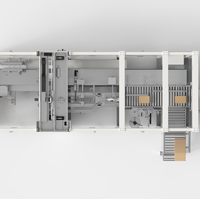
K.Pak Topload Case Packer

Introducing our latest solution from Körber; the K.Pak Topload Case Packer! Created specifically for the pharmaceutical industry, the K.Pak solution provides operator-friendly machines to complete any production line. Our solution focuses on innovative technology, high-quality design and expert handling and packaging of your product. It’s time to start connecting the dots with Körber!

Packaging solutions

Packaging solutions

As long-standing specialists, we develop packaging solutions for innovative and high-quality secondary pharmaceutical packaging made of cardboard. We offer you solutions for counterfeit protection, standard folding boxes and much more.

Overview Packaging solutions

Consulting

Consulting

Our experts will advise you during the analysis of your requirements, show you optimization potential and support you during the implementation of projects in all areas of the pharmaceutical, biotech and medical device industry. Our aim is to achieve holistic optimization for your factory of excellence.

Overview Consulting

Services

Services

You need help with a specific product or have questions about one of our areas of expertise? Körber is your forward-looking navigator to excellence. We provide data-led, proactive advice and services to improve what is needed to scale and evolve towards your factory of excellence.

All Services

Ticket System for Machine Services

Our new Ticket System is now live – making it easier than ever to request support, track progress, and access service information for your machinery.

Access the Ticket System

Blog

Personalized medicine at scale: how pharma can master variability without slowing down

Personalized medicine is changing what good looks like in pharma operations. When therapies are tailored to patients or biomarker-defined subgroups, the unit of value shifts: more product variants, smaller batches, higher stakes, and tighter expectations for traceability and quality.
Regulatory tracking reflects the momentum. The Personalized Medicine Coalition reports that 18 personalized medicines were approved in 2024, representing about 38 percent of newly approved therapeutic molecular entities in the U.S.⁽¹⁾

At the same time, treatment selection increasingly depends on biomarker information that is referenced directly in labeling. The FDA maintains a Table of Pharmacogenomic Biomarkers in Drug Labeling, listing therapeutic products with pharmacogenomic or biomarker related information and describing how that information is presented in labeling. ⁽²⁾

For manufacturers, the implication is simple: scientific precision must be matched by operational precision. That means building systems that can absorb variation without compromising compliance, product quality, or patient confidence.

Highlights:

  • Gain a clear view of how personalized medicine reshapes operational demands.
  • Identify the core friction points that decide whether small‑batch portfolios scale well.
  • See how integrated, digitalized operating models keep speed and compliance aligned.

Why personalized medicine creates operational complexity

Scientific progress is the headline, but operational execution is where value is won or lost. As personalized and advanced therapies scale, manufacturers typically face four shifts at once:

  • From high volume to high mix: more SKUs, more frequent changeovers, and tighter synchronization between packaging, labeling, and release.
  • From standard batches to smaller lots: high value therapies amplify the cost of downtime, rework, and yield loss.
  • From local traceability to end to end traceability: chain of custody and chain of identity become critical when products are patient linked.
  • From siloed systems to connected decision making: quality, production, and supply chain data must align to keep decisions consistent and audit-ready.

Small batch manufacturing is where these pressures converge. Industry analysis highlights recurring challenges such as frequent changeovers, high cost per unit, and the need to protect product yield and sterility, and it points to modular systems, single-use technologies, and automation as practical enablers for small batch environments. ⁽⁴⁾

For advanced therapy medicinal products, complexity also shows up in the regulatory landscape. The European Medicines Agency publishes guidance relevant for advanced therapies, including material that addresses gene and cell-based products, comparability considerations, and scientific expectations across development and manufacturing. ⁽³⁾

In other words, personalized medicine does not only change what you make. It changes how you plan, execute, document, inspect, and release. The organizations that scale best are those that treat variability as a design input, not an operational surprise.

Three pressure points that determine success

These three pressure points show up across modalities, especially when portfolios move toward smaller lots and higher mix. The good news is that they can be managed systematically, with the right operating model and the right integration approach.

1) Speed and compliance

Personalized medicine rewards rapid learning cycles and faster supply responsiveness. Yet regulated manufacturing still demands documented control, validated processes, and robust quality systems. The practical solution is to design compliance into the operating model: digital records, risk-based validation, standardized workflows, and clear handoffs that scale across sites and partners.

Regulators are also explicit that advanced therapies require careful attention to quality expectations across development and manufacturing. EMA guidance relevant for advanced therapy medicinal products underscores how multiple guideline areas converge and why early alignment to expectations matters for later stage scaling. ⁽³⁾

Operationally, speed and compliance are not opposing goals. The fastest teams reduce manual handoffs, eliminate re-entry of data, and standardize the evidence trail so that review and release do not become a bottleneck. This is particularly important when product variants and market versions increase.

2) Flexibility and repeatability

Flexible lines are a must, but repeatable outcomes are non negotiable. The winning pattern is modular process design supported by automated controls and inspection, so changeovers are fast while acceptance criteria stay stable. Instead of relying on heroic operator knowledge, leading sites encode changeover logic into guided, verifiable processes.

In small batch environments, flexibility is also a cost lever. Industry coverage emphasizes that changeovers and downtime can dominate economics, and that modular systems and single-use technologies help reduce the change burden and protect yield for high value drugs. ⁽⁴⁾

Repeatability improves when inspection and packaging processes are designed for the batch reality, not optimized only for the high volume ideal. This includes ensuring that line clearance and format change steps are performed consistently and documented automatically to reduce deviation risk.

3) Data trust and interoperability

Personalized therapies increase the number of data objects that matter: biomarker results, batch records, deviations, release decisions, and sometimes patient-linked traceability. The FDA’s Table of Pharmacogenomic Biomarkers in Drug Labeling illustrates how often genomic and biomarker context now appears in labeling, which in turn increases expectations for consistent data capture and governance.⁽²⁾

Data trust is not only about storing information. It is about being able to prove what happened, when it happened, and why decisions were made. When systems are disconnected, teams compensate with manual reconciliation. That slows release and raises compliance risk. When systems are connected, teams can standardize review by exception, reduce documentation effort, and maintain consistent decision rules across lines and sites.

The Personalized Medicine Coalition’s annual FDA analysis shows that personalized medicines continue to represent a significant share of approvals. As portfolios shift in that direction, the number of product variants and label contexts that must be supported tends to rise. This makes interoperability and consistent data governance a scaling requirement, not a digital nice-to-have.⁽¹⁾

A benefit-led way partner with Körber

The goal is not to buy more tools. The goal is to reduce interfaces and make performance predictable in a world of variability. An ecosystem approach helps align machinery, software, materials, services, and consulting so that changeovers, documentation, and quality decisions work together.

Where Körber can support along the value chain, without going deep into individual solutions:


For a practical example of how demand pressure can reshape packaging requirements, see the Körber blog article: Packaging innovation in the age of GLP-1.

A quick readiness checklist for leaders

Use these five questions to spot the biggest friction points in your current operating model:

  • Can you change over fast without losing compliance or increasing deviation risk?
  • Can you prove end to end traceability for patient-linked therapies, including chain of custody?
  • Can you absorb SKU growth without rising obsolescence and inventory costs?
  • Do you have a digital backbone that makes review and release scalable across sites?
  • Do you have a risk-based validation approach for novel tech such as AI and advanced analytics?

Get your personalized medicine operations support

If your portfolio is shifting toward higher mix, smaller lots, or advanced therapies, the fastest wins often come from removing interfaces and standardizing what can be standardized. Use the links below to start a conversation and explore the ecosystem.

Back to top
Back to top